Ancient Grains Comparison: Einkorn, Emmer, and Spelt Side by Side
Line up three jars of ancient-grain flour on the counter and they look like siblings: sandy gold, faintly speckled, wholesome. Then you add water and everything changes. Einkorn turns slack and sticky within a minute. Emmer holds together a little longer, then softens. Spelt mixes into something that feels almost like bread flour, until you knead it thirty seconds too long and the whole thing goes limp. Knowing which grain does what is the difference between a loaf that rises and a brick that doesn't.
A quick orientation before the flour hits the bowl
All three are wheat, just older branches of the family. Einkorn (Triticum monococcum) is a diploid wheat with small, slender kernels and one of the longest histories of any cultivated grain. Emmer (Triticum dicoccum) is a tetraploid, sturdier and larger-kernelled. Spelt (Triticum spelta) is a hexaploid, which means it shares more of its genetic architecture with modern bread wheat than the other two do.
In Italy the word farro covers all three, which causes endless confusion abroad: farro piccolo is einkorn, farro medio is emmer, farro grande is spelt. If a recipe just says "farro," it usually means emmer.
- Einkorn — smallest kernels, weakest gluten, sweetest flavour; flat and tender bakes.
- Emmer — the middle ground; earthy, sturdy enough for rustic loaves and pasta.
- Spelt — closest to modern wheat, strongest gluten of the three, most versatile.
Flavour: sweet, earthy, and somewhere in between
Einkorn is the one people notice first. It tastes nutty and faintly buttery, with a sweetness that lingers, and it bakes to a warm yellow crumb thanks to its carotenoids. Whole-grain einkorn can turn slightly bitter if the flour has been sitting in the cupboard since spring, so buy it in small amounts and use it within a few months.
Emmer is deeper and more savoury. Think malt, toasted hazelnut, a whisper of earth. It stands up to olive oil, rosemary, roasted onions and strong cheese in a way einkorn does not; einkorn gets lost under bold flavours, emmer argues back.
Spelt is the mildest and most familiar, creamy and gently nutty with a sweet finish. If you handed someone a slice of 100% whole spelt bread without explanation, they would probably call it "wheat bread" and ask for butter. Long fermentations mute the sweetness in all three and add acidity, which is worth remembering if you find spelt a little bland.
Gluten strength, and why the dough goes slack
Ignore the protein percentage on the bag for a moment. Einkorn can post a respectable number and still make a weak dough, because bread structure depends on the balance between glutenin and gliadin, and einkorn leans heavily toward extensibility rather than elasticity. Translated into the kitchen: the dough stretches beautifully and then tears.
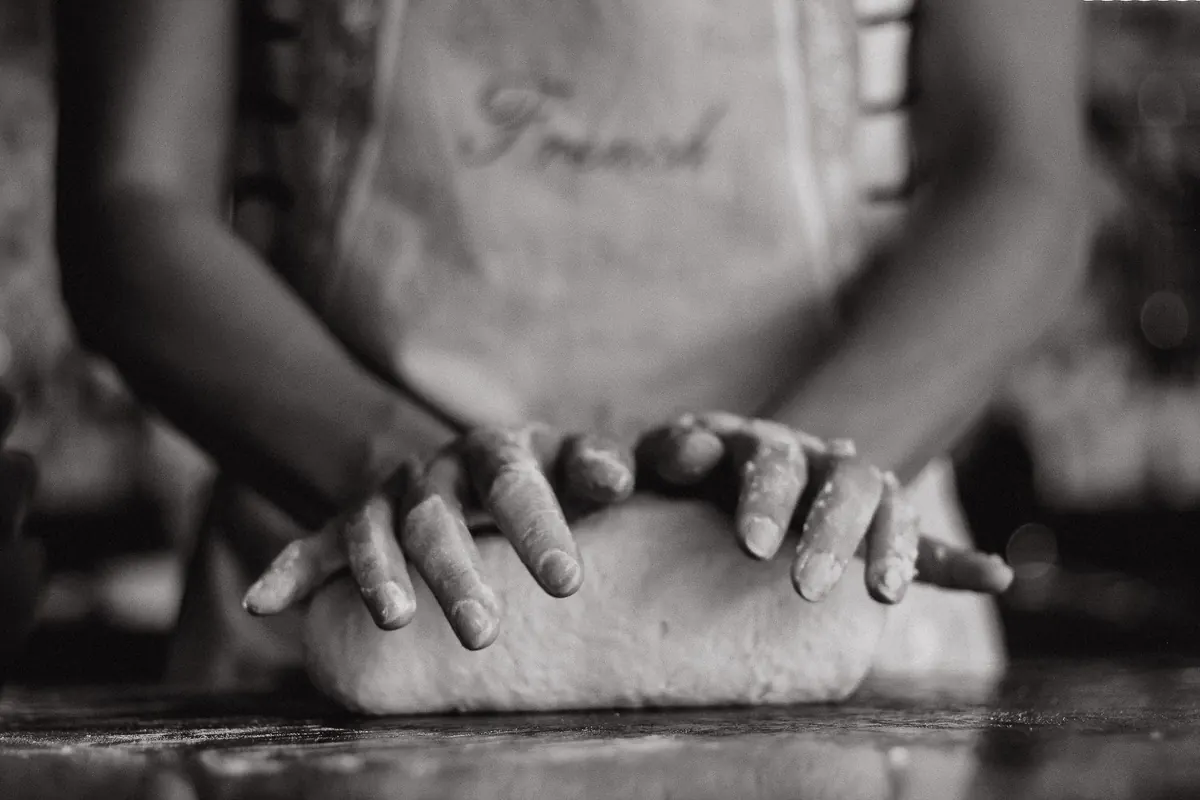
Einkorn is the weakest. It will not hold gas for long, and a wet dough left to bulk ferment turns soupy faster than you expect. Work it cool, keep the hydration lower than you would for modern wheat, knead barely at all, and shape with wet hands rather than flour.
Emmer sits in the middle. It can build genuine strength if you give it time and folds instead of kneading, and it ferments predictably enough that sourdough bakers trust it. Spelt is the strongest of the three, but "strong" here is relative: its gluten is extensible and fragile, and it degrades quickly once it has been mixed. Spelt dough goes from silky to slack in what feels like a minute, so shorten your mixing and finish with stretch-and-folds.
A note worth stating plainly: all three contain gluten and are not suitable for coeliac disease or wheat allergy. Some people who react badly to modern commercial wheat report tolerating these older grains, but that is an individual matter, not a guarantee. If you have a diagnosed condition or persistent symptoms, speak to a doctor or dietitian before building your diet around them.
Cooking times: berries, cracked grain, and pasta
Whole, unsoaked berries simmered in plenty of salted water land roughly here. Treat these as starting points, not rules: crop, age and whether the grain is pearled all shift the timing, so bite a few as you go.
- Einkorn berries — 20 to 25 minutes. Small kernels, quick cookers, pleasant chew.
- Emmer berries — 30 to 40 minutes. The classic farro bite.
- Spelt berries — 40 to 55 minutes. An overnight soak cuts this by about ten minutes.
Pearled or cracked versions cook far faster, sometimes in half the time. For flour-based cooking, einkorn pasta softens almost immediately in boiling water, so watch it closely; emmer pasta keeps a firmer bite, and spelt pasta sits between the two.
Best baking uses for each grain
Einkorn: tender and flat
Crackers, flatbreads, pancakes, waffles, muffins, shortbread and biscuits are where einkorn shines, because a weak gluten is an asset in anything you want short and delicate. It also makes lovely pasta if you like it soft. Pan loaves are possible, but expect a moist, dense crumb rather than a tall one.
Emmer: rustic and savoury
Emmer is the grain for hearth loaves with a portion of strong bread flour behind them, for focaccia, for pizza dough in a blend, and for hand-rolled pasta. It is also excellent cooked whole in soups and grain salads, where its malty flavour does more work than any flour could.
Spelt: the everyday all-rounder
Spelt handles yeast better than the other two, which makes it the natural choice for sandwich loaves, cinnamon rolls, pizza and high-hydration sourdough. Whole spelt gives cookies a pleasant chew, and spelt flour makes a light, nutty cake. If you are replacing modern wheat in a familiar recipe, start here.
Blending and handling: four habits that help
Converting a wheat recipe to an ancient grain is mostly a matter of restraint. Hold back about a tenth of the liquid at the start, since these flours generally absorb less water than modern wheat, and add it only if the dough asks. Mix briefly and let the dough rest for twenty minutes before you judge it; the flour hydrates slowly and what looks dry now may be perfect later. Replace kneading with three or four sets of stretch-and-folds spaced through the bulk ferment. Finally, bake in a tin or a lined basket rather than free-form, and accept a little less oven spring as the price of flavour.
A practical place to start
Buy half a kilo of each, and make the same simple recipe three times in a week: a flatbread, or a loaf at seventy percent ancient grain and thirty percent bread flour. Keep notes on how much water you used and how the dough felt. Within a few batches you will stop reading the bag and start reading the dough, which is the only real comparison that matters.
Photo: Joel Camelot / Pexels